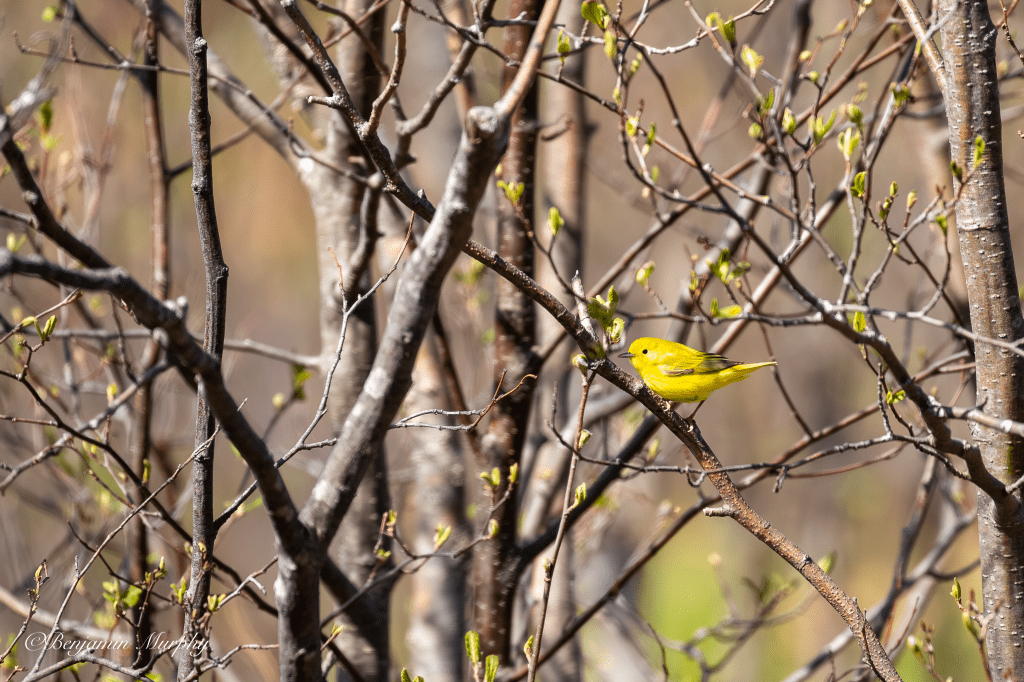
Image of a Northern Yellow Warbler courtesy of Benjamin Murphy.
As migration takes place in the spring and fall biologists and volunteers take to fields and research facilities to capture and band birds for the purpose of tracking and protecting them. Volunteers record all information, and the birds are set free to carry out the rest of their migration.
Where is Begins
According to Audubon Society one of the first things that happen when the banding season begins is choosing a location. Researchers can choose these locations to target a specific species or an opposing location that targets multiple species for banding. Once the location is selected and the researchers are satisfied with their selections The next step is to set up the mist nets, these are very fine nets that birds cannot see, for safely capturing the birds for inspection and banding. Once the nets are set up the next piece is to regularly check the nets to make sure that each bird is being removed in a timely fashion as to not injure or kill the bird.
Information Gathered
There is plenty of information that is gathered during the banding process. Audubon Society participates in selecting locations and helping to identify the animals as they are being captured. As the bander inspects the bird the first thing the determine is if the bird has been previously banded, if so, the number is recorded as an interaction with the species and then released. If the bird is not already banded, they measure the bird’s leg to determine the appropriate size for the band as to not hurt the animal. Once the number has been recorded the bird’s sex is determined, fat stores of the animal, breading status, weight and length of the wing is determined and recorded as part of the data collection system. The SCI NC goes through everything that happens once a shore bird has been banded and the process to get the banding accomplished.
Conservation with Banding
The Birding Coalition discusses what information is recorded and how that information is applied to decision making that affects conservation efforts for the migratory species of birds. This information is recorded and then used to help influence protections through the Endangered species Act, assisting in creating and protecting critical stopover points for birds as they migrate. While protecting these stopovers it protects the habitats and food sources for the birds giving them the critical rest and replenishment that is needed to complete their migration without endangering the animals. The British Ecological Study did data collection on the safety of mist netting as compared to the conservation work that was being conducted for data analysis. With more than 620,000 birds banded during a season there was less than 5000 incidents. Resulting in 23 percent mortality rate with a 15 percent injury rate. These numbers are relatively low for the number of birds tracked and saved each year through conservation efforts. Audubon Connecticut shows how bird banding helps with conservation through banding.
While the historical practice of bird banding dates to the late 1500s, in its early years it was used to track falcons and return them to their owners. As time progressed the action of banding birds became a vital tool to manage and assist with conservation. The act of banding birds influences policies for both animal and habitat conservation. There are large numbers of employees and volunteers for the different organizations that directly contribute to the process of protecting these animals. Much like mammals and sea life, banding goes a very long way to preserving habitats and tracking the longevity of a species.
Another spot more information can be gathered is on YouTube. This video by Nature with Gabe, highlights some of the process of bird banding.


Leave a Reply