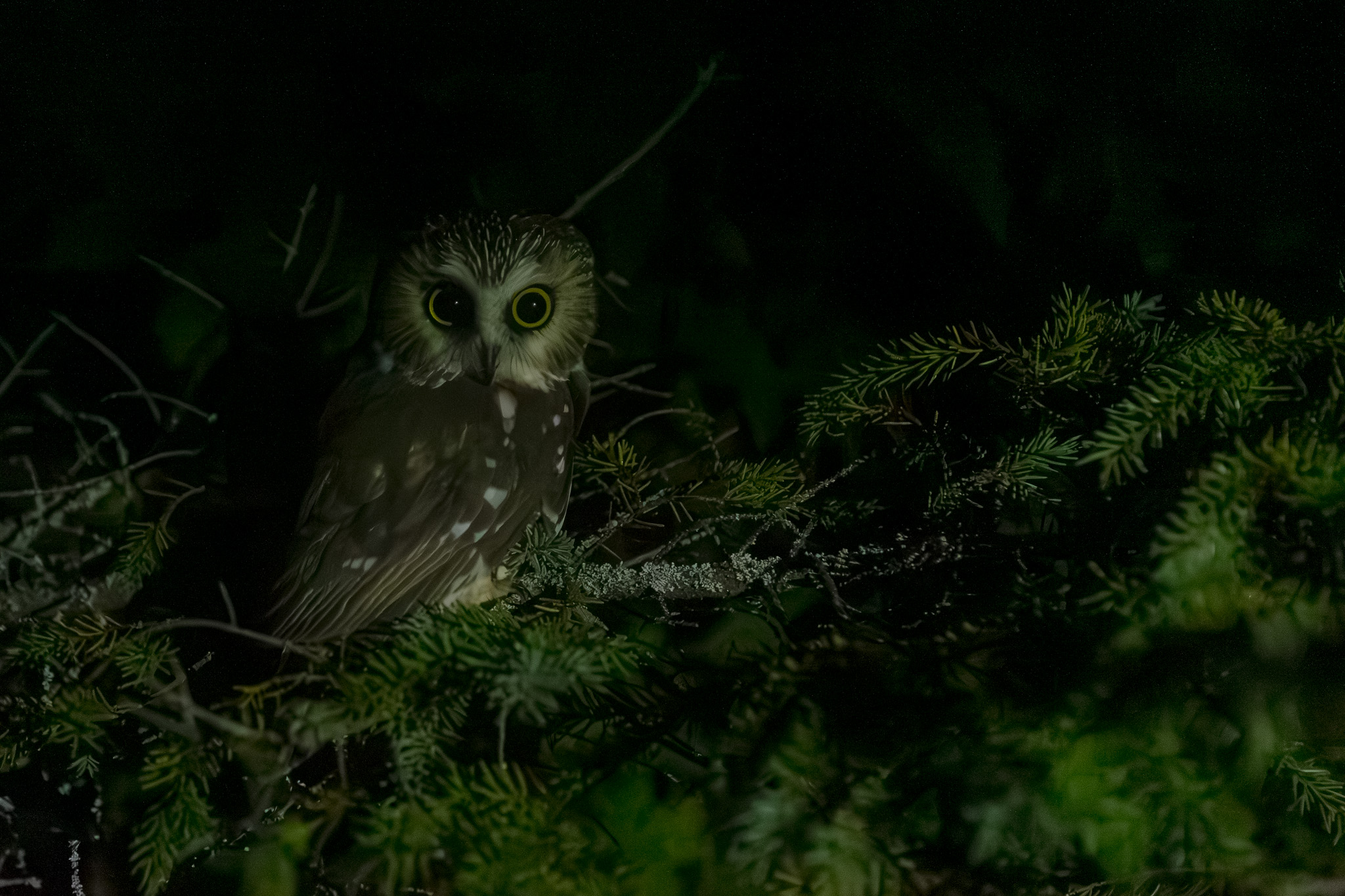
Two banders spend fall nights catching, recording and releasing northern saw-whet owls for science.
ST. IGNACE, Mich. — Owl banding began here in 2014 and has been a fall and spring event every year for the last 12 years. The Petoskey News-Review reported in 2017 that 282 owls were caught, banded and released that year, the most recorded in the first three years of the program.

In 2026, the program continues and has recorded 177 northern saw-whet owls as of Oct. 18, according to the Mackinac Straits Raptor Watch. This year’s lead bander is John McKay, originally from upstate New York. The assistant bander is Levi Sheridan, originally from Lansing, Mich. In an interview, the two said the program averages about 380 saw-whets a year.
McKay walked through the banding process and explained what scientists can learn from the bands. Each band carries a unique serial number and is tracked by the U.S. Geological Survey’s Bird Banding Laboratory. “Banding is used to track migration patterns, growth of the animals and population size,” McKay said.

After a band is placed on an owl’s leg, the serial number is recorded in a handwritten log along with the bird’s size, weight, approximate age and sex, if it can be determined. Each owl without a band receives one it will never outgrow. If a bird already has a band, the information is recorded and the owl is released.


A black light helps determine a saw-whet’s age. “Porphyrin in the wings glows bright pink under the black light. A yearling is all pink, and the sun fades it to white, allowing for an approximate age,” Sheridan said. Owls do not molt all their feathers at once; they replace only some each year. By not molting all the feathers it allows the colors to help approximate the age of the owl.

The recommended mist net for saw-whets is 60/61 mm. “A lot of work and science has gone into protecting the animals, and saw-whets are very hardy birds,” McKay said. Buying mist nets requires both federal and state banding permits.
The banders work from September through mid-November, catching, banding and recording information through the night. The data is then submitted to the USGS. Weather is the only thing that stops netting on a migration night. Heavy rain, storms or high winds halt the process to keep birds from being injured.

Leave a Reply