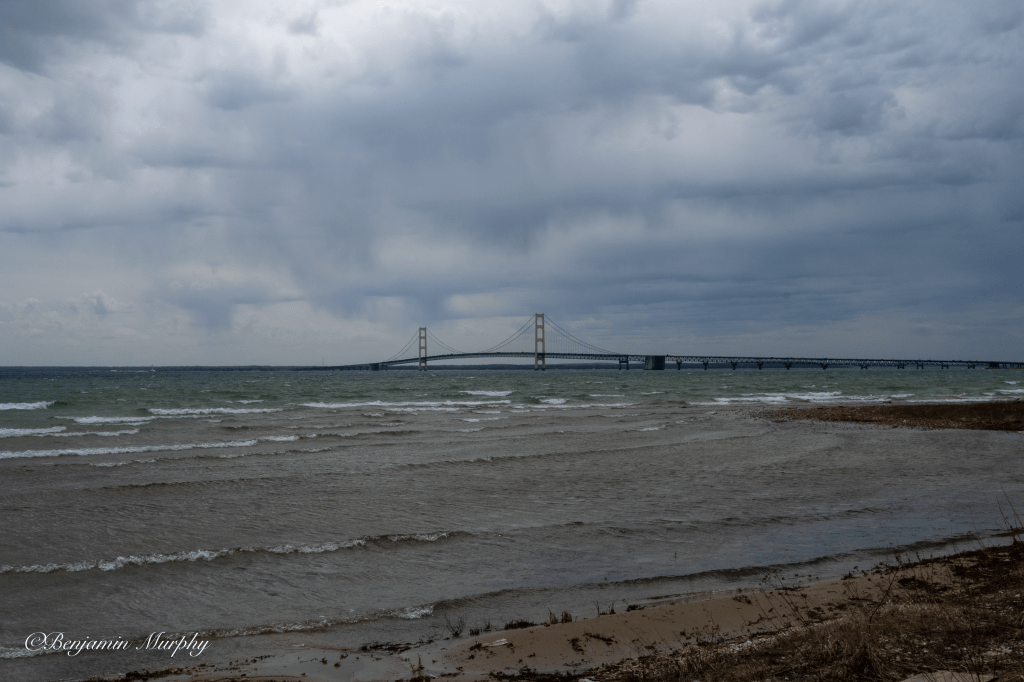
Image of the Mackinac Bridge in Saint Ignace, taken by Benjamin Murphy
Artificial Intelligence is currently causing water depletion concerns amongst the Great Lakes Region.
As more data centers are constructed throughout Michigan and the Great Lakes region, concerns continue to grow amongst residents. Michigan conservation voters are attempting to stop the building of data centers and help to preserve the environment. Data centers utilize water fresh water sources in the region. Data centers utilize an evaporative cooling or open loop system, which is effective for cooling the system but utilizes substantial amounts of water in the process.
According to Earth Justice’s Kathryn McGrath – “AI data centers also require immense amounts of water for cooling, often one to five million gallons per day. Although less water intensive technologies are available, most data centers still rely on inefficient evaporative cooling.” In doing this they are currently not drawing water directly from the lakes but are drawing water from local municipalities.
According to Helena Volzer from the Alliance for the Great Lakes, the centers that are being constructed can consume one million gallons of water or more when the construct the data centers that fall into the hyperscale size. While there are currently no reporting guidelines or laws for water usage reports, it is reported that they currently fall on the water districts to report the amount of water consumed. While there are other options for cooling these large facilities, it changes from large amounts of water being consumed to large amounts of electricity being utilized, which then still needs additional water especially if the systems are powered by either fossil fuels of nuclear.
“The excitement surrounding potential benefits of generative AI, from improving worker productivity to advancing scientific research, is hard to ignore. While the explosive growth of this new technology has enabled rapid deployment of powerful models in many industries, the environmental consequences of the generative AI ‘gold rush’ remain difficult to pin down, let alone mitigate.” Adam Zewe of MIT news added.
As of May 2026, there are two completed artificial intelligence sites that have been built with another 25 additional sites that are planned. With at least 16 of these sites being geared toward building hyperscale data centers.
The rapid addition of new sites restricts the possibility of there being a possibility of adding restrictions to assist in protecting the environment and the lack of mitigation makes adding additional regulations paramount in preserving the environment. As the progress is slowed down through proper application of laws, it allows better mitigation policies to be put in place to potentially help find environmentally safe alternatives.
Additional information can be found here:
https://news.mit.edu/2025/explained-generative-ai-environmental-impact-0117


Leave a Reply